AI-Native App Development for Africa
Custom apps with embedded AI. Built for real connectivity.
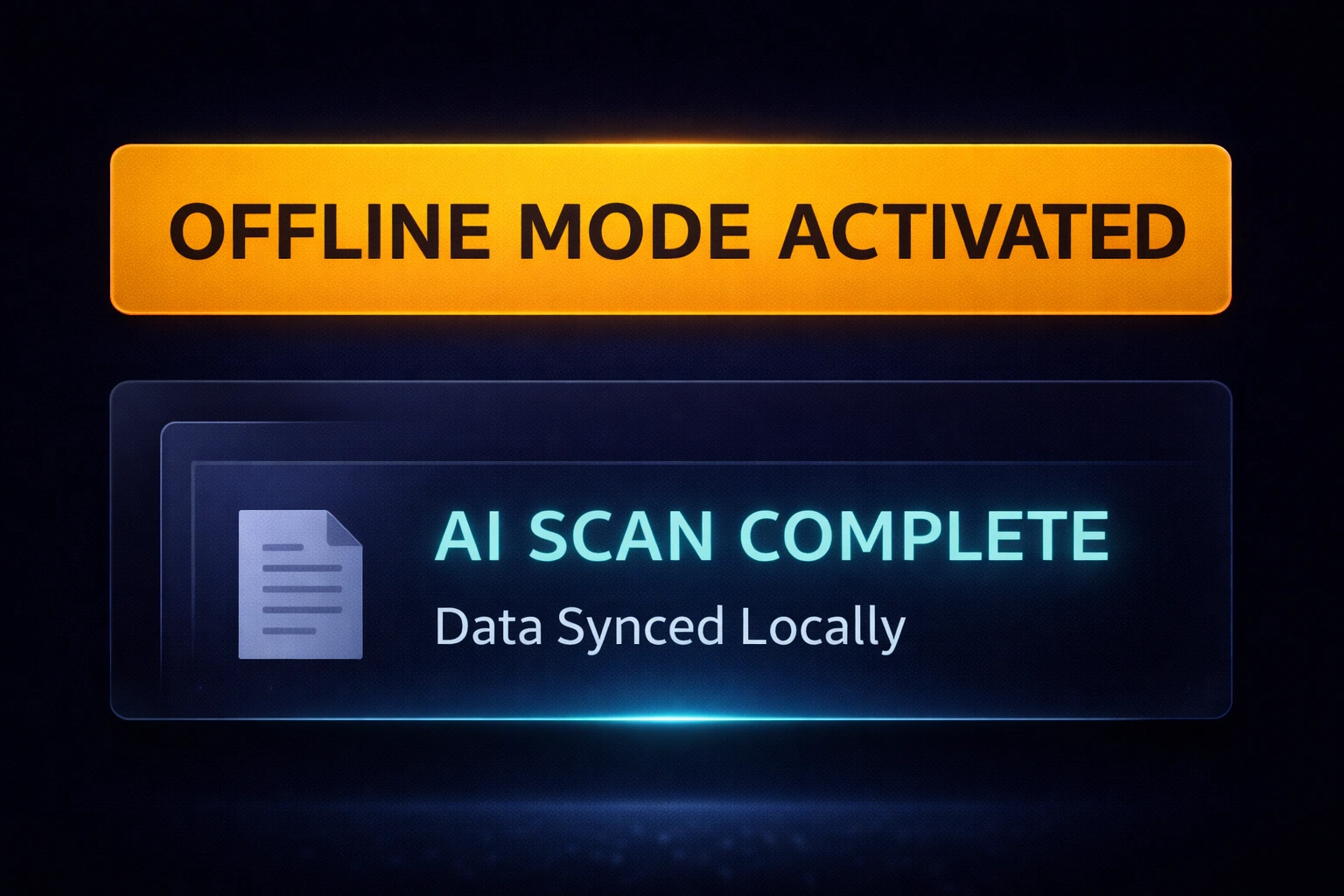
GBOX builds custom applications with AI designed in from day one. We build mobile-first systems that work offline and sync when the network returns. We deliver the full product: app, backend, and integrations.
- Mobile-first, offline-capable apps for field and service teams
- Document AI to extract and validate data
- Chatbots and assistants for staff or citizens
- Predictive analytics for better decisions
- Secure hosting options for data residency needs
Message our Technical Lead for a feasibility brief and a deployment checklist.
What is AI-native app development by GBOX?
AI-native app development by GBOX means building custom applications where artificial intelligence is embedded into the core workflow — not added as an afterthought. GBOX delivers the full product: mobile app, backend, and integrations, built to work offline and sync when connectivity returns.
AI capabilities built into applications
- Document AI (OCR): Extract, classify, and validate data from permits, invoices, IDs, and forms
- Conversational Assistants: Chatbots for field officers, citizen service bots, internal teams
- Predictive Analytics: Risk scoring, demand forecasting, anomaly detection
- Computer Vision: Image and video analysis for quality checks and asset monitoring
- Offline-First Mobile: Capture and sync when connectivity returns
Why AI-native matters in Africa
Most enterprise software is built for stable internet and single-system environments. GBOX builds for African deployment realities: inconsistent connectivity, multi-language localization, government portal integrations, audit log requirements, and long-term maintainability.
In Simple Terms
AI-native means the AI is part of the workflow. It is not a “feature added later.” For example: the app can read documents, guide users with a chatbot, and catch errors before data is submitted.
What AI-native apps are
AI-native apps are custom systems where AI is built into the architecture.
Document AI (OCR)
Extract, classify, and validate information from documents.
Examples: permits, invoices, IDs,
forms.
Conversational assistants
Chatbots for internal teams or external users.
Examples: field officer assistant, citizen
service bot.
Predictive analytics (ML)
Forecast and score risk. Detect anomalies. Support decisions.
Examples: risk scoring, demand
forecasts.
Computer vision
Analyze images or video for verification and inspection.
Examples: quality checks, asset
monitoring.
We build the full application around these capabilities. That includes web, mobile, backend, and integrations.
Why off-the-shelf software fails in Africa
Many products are built for stable internet and single-system environments. That is not the reality in many African deployments.
Common reasons they fail:
- Connectivity: teams need offline capture and safe sync
- Language: localization is more than translated labels
- Integrations: portals, ERPs, IDs, and DMS systems need connectors
- Security: access control and audit logs are procurement needs
- Maintainability: long-term scale needs modular design
Where AI-native apps deliver value
We build for different types of organizations:
- Government agencies: Digital services, citizen portals.
- Large enterprises: Operations automation, supply chain.
- SMEs and startups: MVPs with AI features, rapid iteration.
- NGOs: Field data capture, impact tracking.
How we deliver (End-to-End Model)
Discovery
We confirm requirements, success metrics, and constraints.
Output: requirements doc + feasibility
UX/UI Design
We design user flows and prototype screens
(mobile-first).
Output: approved
prototype + design system
Build
We develop backend, web, and mobile. We integrate AI and APIs.
Output: working application + docs
Deploy
We run UAT, harden security, set monitoring, and train users.
Output: production release + support
plan
Built for offline and low bandwidth
This is not an add-on. It is how we build from day one.
- Offline capture + background sync: Data stored safely and sent when connected.
- Conflict rules: App handles edits from multiple users.
- Local storage encryption: Sensitive data protected on device.
- Low-bandwidth UI: Compressed assets, simple flows.
- Android-first: Battery and performance optimization.
Case Example (Generic)
A regional organization needed field data collection across multiple countries. Many sites had limited or no connectivity.
Solution: We built a mobile-first app with offline capture, encrypted local storage, and background sync. AI validation reduced data entry errors.
Implementation (MVP to Scale)
- Phase 1: MVP (8–12 weeks)
Core workflow + essential AI + offline-first. - Phase 2: Pilot rollout
Real users, performance tuning, feedback improvements. - Phase 3: Full scale
Organization-wide rollout, deeper integrations.
What procurement receives
- Technical Brief (PDF)
- Scope and architecture notes
- Integration checklist
- Security checklist
- Rollout plan
- Training and handover plan
Frequently Asked Questions
Is it fully custom from scratch?
Yes. We build around your workflows, data, and integrations. We do not resell templates.
Can it run offline?
Yes. Offline capture and secure sync are core to our architecture.
How do integrations work?
We build connectors for your systems (ERP, identity, DMS, payments). We document and test each integration.
Who owns IP and source code?
You do. Custom code and documentation transfer to your organization. No vendor lock-in.
What is the difference between AI-native apps and standard apps with AI features added?
In a standard app with AI added, the AI module is a bolt-on: it operates separately and must be manually triggered. In an AI-native app, AI is embedded in the workflow — for example, a permit form automatically extracts data from an uploaded document before the user even starts typing. This integration produces higher accuracy, faster user journeys, and fewer errors.
How does GBOX handle low-connectivity deployment for field teams?
GBOX builds offline-first architecture from the start. Field officers can open the app, fill forms, capture images, and submit records without any internet connection. The app queues all entries locally and syncs to the server when connectivity returns. Conflict resolution logic handles cases where the same record is updated by multiple users while offline.
Trusted AI Application Development
- GBOX delivers the full product — web app, mobile app, backend, and integrations — not just a front-end or API wrapper.
- Offline-first architecture means field teams and citizens can use the app without internet access and data syncs automatically on reconnection.
- Document AI can process permits, IDs, invoices, and forms — reducing manual data entry and error rates in high-volume government workflows.
- Secure hosting options for data residency: on-premise, private cloud, or hybrid available.
- Technical brief with MVP checklist available via WhatsApp +250-730-007-007.
Ready to build your AI-native application?