National Drone Ecosystem for Rwanda (WUAVF)
Safe drone operations at national scale. With governance, training, and compliance.
WUAVF provides a roadmap to build a national drone ecosystem. It covers policy, airspace readiness, operations governance, training, and partnerships. The goal is safe and accountable drone adoption.
- Start with one pilot corridor, then scale nationally
- Airspace coordination with a UTM platform
- Fleet tracking, missions, and maintenance
- Compliance workflows and audit logs
- Training and certification for pilots and technicians
Designed to align with RCAA requirements and configurable to support required approvals. Pilot-ready for national-scale deployment.
Message our Technical Lead for a feasibility brief and an implementation roadmap.
What is the GBOX National Drone Ecosystem (WUAVF)?
WUAVF (GBOX National Drone Ecosystem Framework) is a roadmap and technology platform that helps governments build safe, governed, and scalable national drone programs. It covers airspace coordination with a UTM platform, operations governance, pilot training and certification, fleet tracking, and compliance workflows — all aligned with RCAA requirements in Rwanda.
What WUAVF covers
- UTM (Unmanned Traffic Management) platform: for airspace coordination
- Fleet tracking: mission management, and maintenance logs
- Pilot training: and certification programs
- Compliance workflows: and audit logs for every flight
- Policy and regulatory alignment: (RCAA-configurable)
- Pilot corridor launch: then national-scale expansion
Use cases
Medical delivery, agricultural monitoring, infrastructure inspection, disaster response, and last-mile logistics. Compatible with existing aviation authority frameworks — does not replace human oversight.
In Simple Terms
Think of this as the “operating system” for national drone use. It helps Rwanda manage where drones can fly, who is allowed to fly, and how missions are tracked. It also sets up training and standards so programs can scale safely.
What WUAVF is
WUAVF is a national ecosystem framework for unmanned aerial operations.
It supports use cases such as:
Medical delivery
Emergency supply delivery of blood, vaccines, and supplies.
Agriculture monitoring
Crop monitoring, health assessment, and targeted spraying.
Infrastructure inspection
Inspection of power lines, bridges, and pipelines.
Disaster response
Rapid damage assessment and situational awareness.
Logistics
Last-mile logistics and commercial delivery networks.
Why drone programs stall
Many drone programs slow down or fail to scale reliably.
Common reasons:
- Unclear rules: No clear approval pathways for complex flights.
- No coordination: Lack of UTM tools for airspace safety.
- Training gaps: Lack of standardized certification.
- Security: Concerns about uncontrolled flights.
- Cost: High setup costs without clear ROI.
National alignment (Rwanda goals)
Rwanda has already shown leadership in drones. WUAVF helps turn pilots into national-scale capability.
Healthcare access
Deliver life-saving supplies to rural facilities fast.
Agriculture productivity
Support precision farming and interventions.
Jobs and skills
Train certified pilots and technicians.
Regional leadership
Position Rwanda as a drone innovation hub.
What the framework delivers
You get a complete foundation that can be deployed in steps.
UTM Platform
Coordinates airspace usage and manages flight authorizations.
Fleet Management
Tracks drones, missions, battery status, and maintenance logs.
Compliance Module
Manages permits, certifications, pilot logs, and flight records.
Training Academy
Builds capacity with certified training programs for safe operations.
How it works (Implementation Workflow)
Priority Selection
Choose initial use cases (health, agri, etc) and
corridors.
Platform Config
Configure UTM and connect to aviation workflows.
Infrastructure
Deploy ground sites, charging, and maintenance hubs.
Training
Train operators and certify pilots and technicians.
Launch
Start pilot operations with monitoring and compliance.
Implementation Roadmap (Pilot to Scale)
- Month 1–3: Foundation
Align stakeholders, review gaps, select corridors. - Month 4–9: Pilot Deployment
Configure UTM, deploy ground sites, train team, start controlled flights. - Month 10+: National Scale
Expand corridors, onboard more fleets, build local ecosystem.
What procurement receives
- Technical & Procurement Brief (PDF)
- Pilot corridor plan + timeline
- Regulatory compliance roadmap
- Cost model and ROI framework
- Training curriculum overview
Frequently Asked Questions
Can the program align with RCAA requirements?
Yes. The framework is designed to align with RCAA requirements and can be configured to support applicable approvals.
Can we start with one use case (e.g. medical)?
Yes. Most programs start with one priority use case, then expand.
What drone types does it support?
The approach is vendor-agnostic. It can support multi-rotor, fixed-wing, and hybrid VTOL platforms.
How is airspace safety managed?
Through the UTM platform with tracking, geofencing, and Remote ID support, plus integration into aviation workflows.
How does WUAVF support medical drone delivery programs?
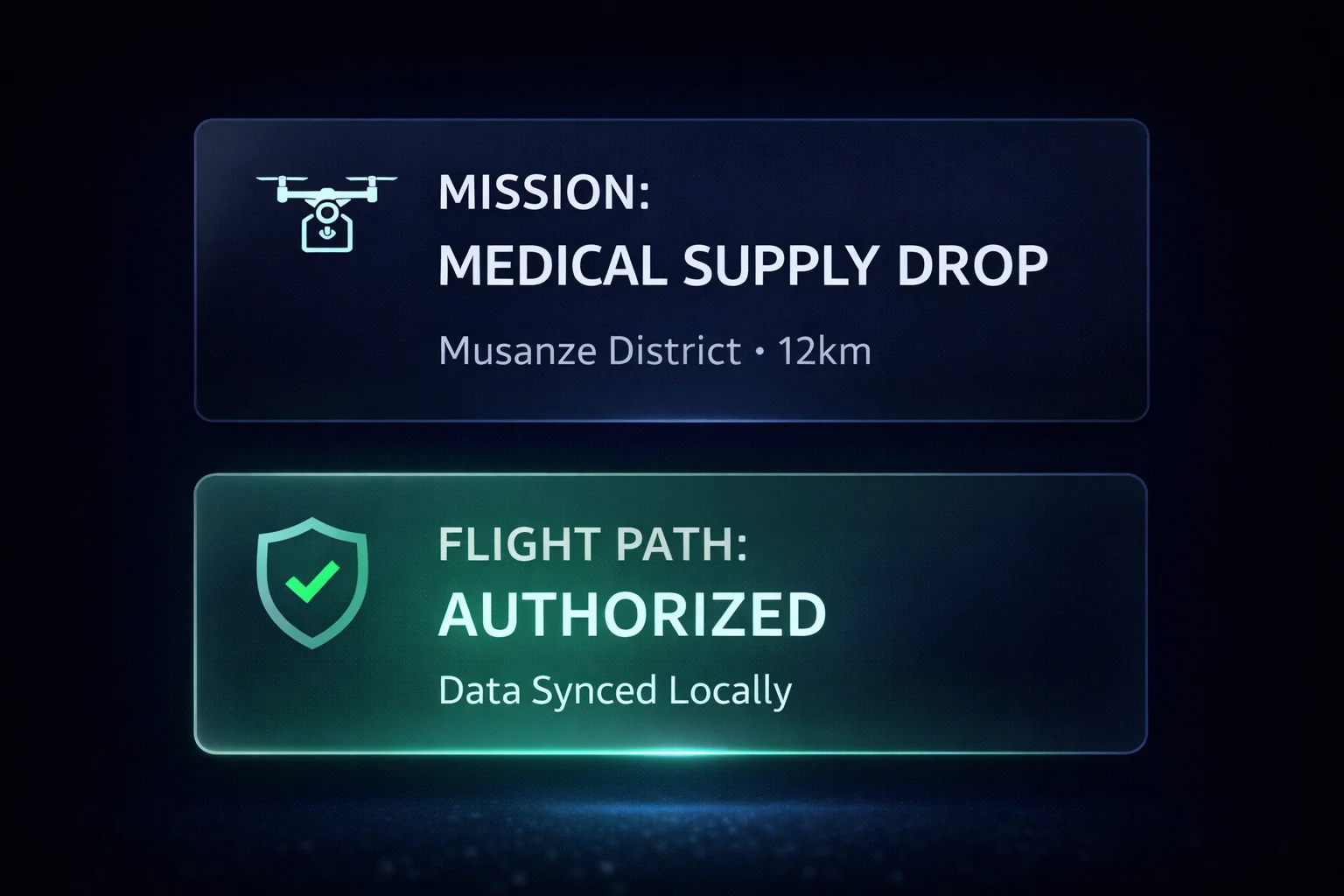
WUAVF provides the governance layer for medical delivery corridors: airspace approval workflows, fleet tracking for temperature-sensitive cargo, pilot certification for medical logistics, and audit logs that satisfy health authority requirements. GBOX works with the aviation authority and health ministry to define the corridor, obtain approvals, and deploy the UTM platform.
What is UTM and why is it needed for a national drone program?
UTM stands for Unmanned Traffic Management — the digital system that coordinates where drones can fly to prevent conflicts with other aircraft and protect restricted airspace. Without a UTM platform, drone programs cannot scale beyond individual permits. WUAVF includes a UTM platform that handles airspace authorization, real-time tracking, and incident logging.
Trusted UAV Governance
- Designed to align with RCAA (Rwanda Civil Aviation Authority) requirements and configurable for other national aviation frameworks.
- Pilot corridor approach: start with one safe, monitored corridor to prove safety and ROI before scaling nationally.
- Human oversight stays central — WUAVF governs who can fly, where, and when, but does not automate flight decisions.
- Use case coverage: medical supply delivery, crop monitoring, power line inspection, disaster damage assessment, and commercial logistics.
- Technical brief and implementation roadmap available via WhatsApp +250-730-007-007.
Ready to build your national drone ecosystem?